Salt Lake City, Utah, August 11, 2025
On 24 July 2025, BruhnBruhn Innovation, SaraniaSat, NV5 Geospatial Software, Netnod, and Hewlett Packard Enterprise executed a first-of-its-kind demonstration aboard the International Space Station. A containerised AI pipeline ran in orbit on HPE’s Spaceborne Computer-2, processed a 1.5 GB satellite image scene in real time, and returned a mission product of 75 kB to the ground. Results were available in seconds. The pipeline was deployed via a standard git push from Earth.
The demonstration was the first validated execution of a Kubernetes-orchestrated, containerised AI workload in an operational space environment.
The challenge
Modern Earth-observation satellites generate data volumes that far exceed what can practically be transmitted to ground. A single multispectral scene from a MAXAR WorldView-3 sensor runs to approximately 1.5 GB. Transmitting raw imagery is slow, expensive, and increasingly impractical as constellation sizes grow. Missions need intelligence extracted where the data is generated, in orbit, not hours later after a ground pass and a processing pipeline on Earth.
At the same time, deploying standard cloud software on space hardware is not straightforward. Cosmic ray upsets can corrupt running containers in ways that do not trigger a process crash. Clock drift breaks secure connections. A failed software update can leave a spacecraft unreachable thousands of kilometres away. These are problems that standard Kubernetes does not address.
Dacreo apto was built to solve both.
What happened on 24 July 2025
SaraniaSat’s Airborne Moving Target Identification application, built on TensorFlow and integrated with NV5 Geospatial Software’s ENVI analytics suite, was packaged as a standard OCI container and deployed to a k3s cluster running on HPE’s Spaceborne Computer-2 aboard the ISS. The deployment used a standard GitOps pipeline: a git commit on the ground became a running container in orbit.
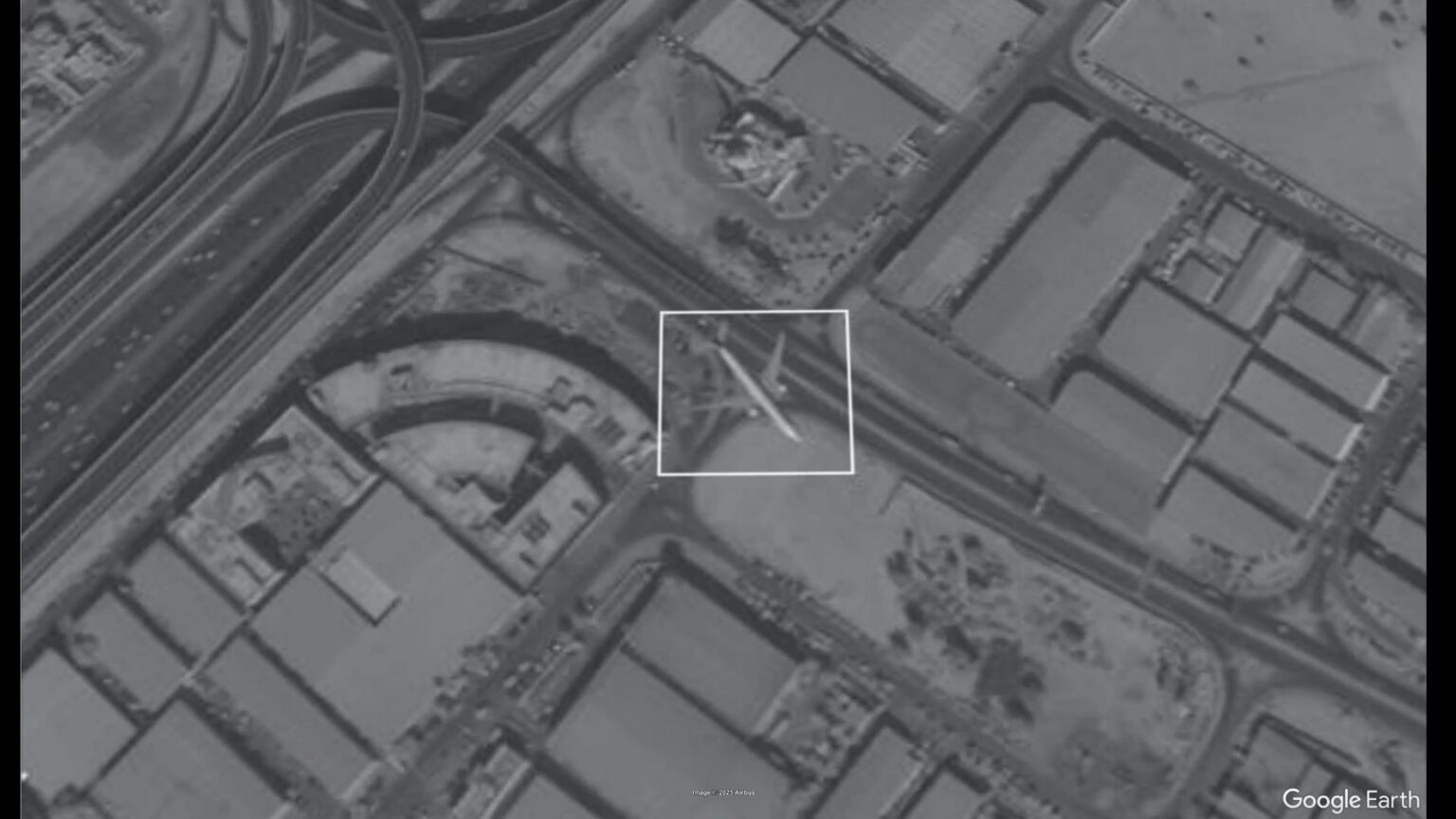
Full-resolution WorldView-3 multispectral imagery, eight spectral bands at approximately 1.5 GB per scene, was uplinked to the ISS via NASA’s Tracking and Data Relay Satellite network. The application ran a two-stage AI pipeline onboard. In the first stage, a feedforward neural network scanned downsampled imagery for candidate regions. In the second stage, a convolutional neural network applied full-resolution analysis to confirm detections. The pipeline identified a single flying aircraft in the vicinity of Dubai.
Only the processed result was downlinked: a geolocated KMZ overlay of approximately 75 kB.
The numbers tell the story clearly. A 20,000x reduction in transmitted data volume. Latency from hours to seconds. No space-specific modifications to application code. The same workflow a developer uses on Earth, running in orbit.
Why it matters
Processing data in orbit changes the economics and the operational tempo of space missions simultaneously. Bandwidth cost scales with transmitted volume, and raw imagery is the most expensive thing to move. Moving intelligence instead of data slashes downlink cost, accelerates decision-making, and enables mission architectures that are simply not feasible under a ground-centric processing model.
For defence applications, the implications are direct: immediate situational awareness, autonomous moving-target tracking, and decision support that does not depend on a round trip to a ground station. For civil and commercial operators, the same architecture enables near-real-time disaster mapping, environmental monitoring, and subscription analytics delivered through API endpoints rather than raw data archives.
The demonstration also confirmed something architecturally significant. Standard OCI containers, GitOps delivery pipelines, and GPU-accelerated AI frameworks execute reliably in the LEO radiation and connectivity environment without requiring space-specific rewrites. The terrestrial cloud and the orbital edge are now the same compute environment.
Partners
SaraniaSat provided the Moving Target Identification application and mission expertise. Hewlett Packard Enterprise provided Spaceborne Computer-2 and access to the ISS compute environment. NV5 Geospatial Software contributed the ENVI Deep Learning analytics suite. Netnod provided secure, resilient networking architecture supporting Dacreo apto development. Financial support was provided by the Swedish National Space Agency.
For a detailed account of the demonstration architecture, the two-stage AI pipeline, and the results, read the full case study.